Mastering the sounds of ‘A’ is a big step in a child’s reading journey. Did you know the letter ‘A’ can change its sound depending on its neighbors? Whether it’s the crisp, short sound in ‘cat’ or the smooth, long sound in ‘cake,’ understanding these patterns unlocks hundreds of new words. Let’s explore the simple rules behind these two common sounds.
1. Short A Sound Words
Short ‘A’ Sound: The Sharp Sound
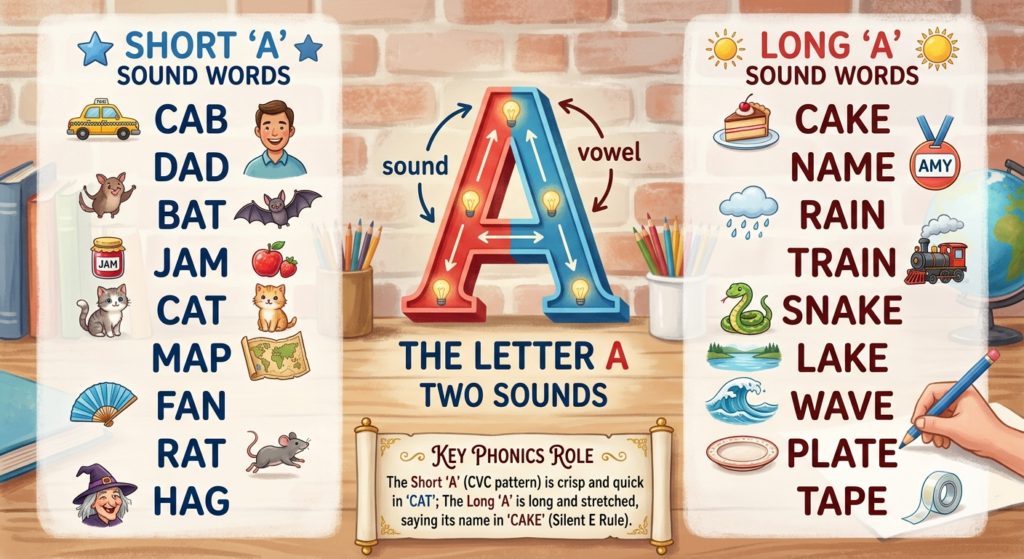
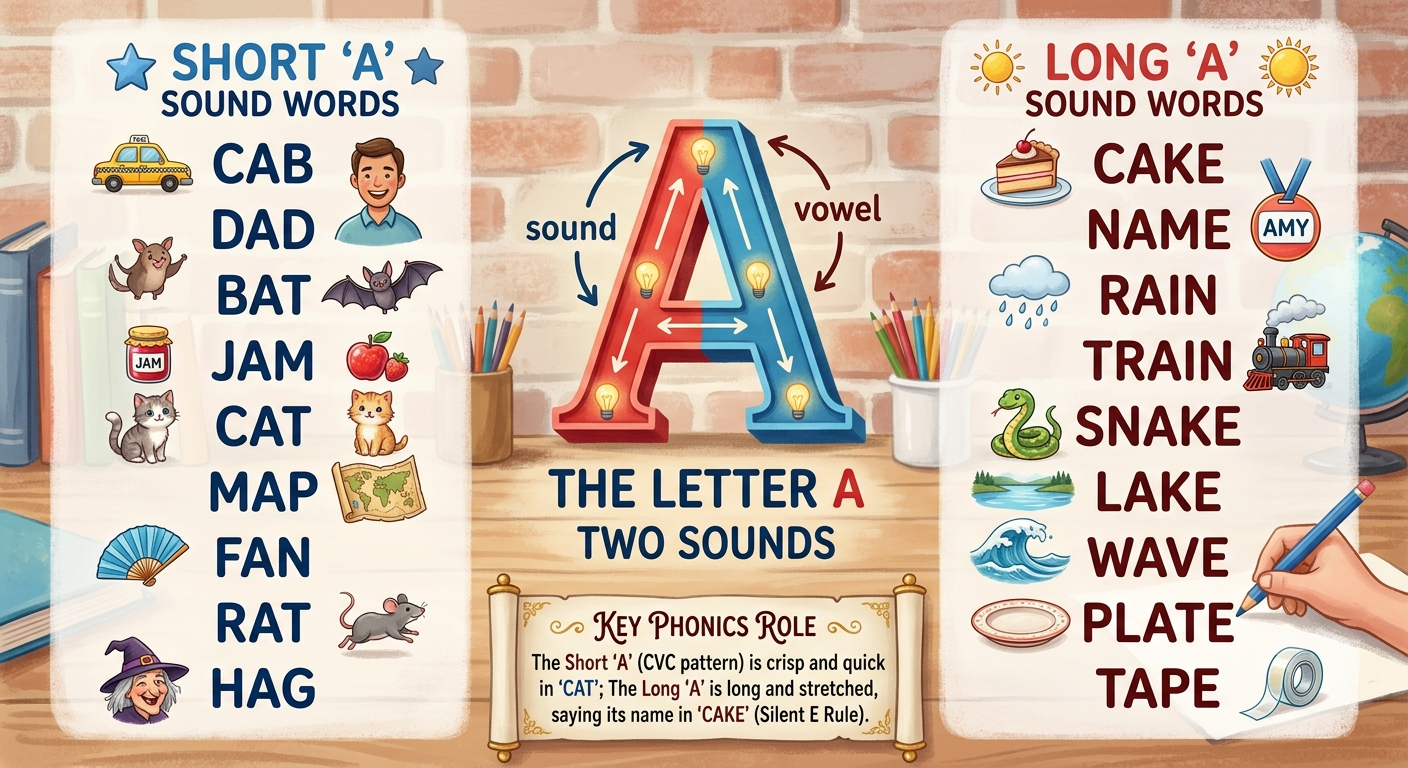
The Short ‘A’ sound is crisp and quick. It typically occurs when the letter ‘A’ is trapped between consonants (the CVC pattern).
- The Rule: When ‘A’ is the only vowel in a word and sits between consonants, the sound is short and sharp, like “ae.”
- Examples: Cat, Map, Bat.
2. Long I Sound Words
Long ‘A’ Sound: The Stretching Sound
The Long ‘A’ sound mimics the name of the letter “A” itself. When pronouncing these words, the sound is stretched out. You can easily identify it through these three common patterns:
- The Silent ‘E’ Rule: When a word ends with an ‘E’, the ‘E’ remains silent, forcing the preceding ‘A’ to become long. (Examples: Cake, Gate, Name)
- The Two Vowels Rule: When two vowels (like ‘A’ and ‘I’) appear together, the first vowel “does the talking” by saying its name, while the second remains silent. (Examples: Rain, Tail, Paint)
- The ‘AY’ Rule: When a word or syllable ends in ‘AY’, they work together to produce a clear, long ‘A’ sound. (Examples: Play, Day, Tray)